


Shop Car, Truck & SUV Tires by Size
Your tire size is one of the most important factors when choosing new tires. Select your wheel size to view Firestone tires that fit your vehicle, whether you drive a car, truck, or SUV. Explore available options and find the features that matter most to your drive. From daily commutes to long road trips, finding the right size makes tire shopping simpler and more efficient.

FIND YOUR TIRE SIZE
Finding the perfect tire for your car, truck or SUV is as easy as selecting your tire size. Your size can be found in a few locations: on the inside frame of the driver's side door, inside the glove box door, your driver's manual or your tire's sidewall.
Tire sizes are comprised of a few key sections organized in a uniform manner. The first letters, either "P" or "LT", stand for passenger or light truck. Following that, the first number represents the width of the tire and the second is the aspect ratio, or your tire height in relation to the width. This is followed by a letter that indicates the construction of your tire, and then lastly, the rim size, or your wheel diameter. Once you have this information, you can select the right wheel diameter for your vehicle and quickly find the tire that best suits your needs.
How to Read Tire Size
Understanding your tire size is the first step to finding tires that fit your vehicle. You can typically find your tire size on the tire sidewall, the driver's side door jamb, inside the glove box, or in your owner's manual.
Example Tire Size: P225/65R17
Each letter and number provides information about the tire's dimensions and intended use.
P = Tire Type
The first letter identifies the type of vehicle the tire is designed for.
- P = Passenger vehicle
- LT = Light truck
These designations help identify the tire's intended application.
225 = Tire Width
The first number is the tire's width, measured in millimeters from sidewall to sidewall.
In this example, the tire is 225 millimeters wide.
65 = Aspect Ratio
The second number is the tire's aspect ratio. It represents the height of the tire's sidewall as a percentage of its width.
A higher number indicates a taller sidewall, while a lower number indicates a shorter sidewall.
R = Construction Type
The letter following the aspect ratio identifies the tire's construction.
- R = Radial construction
Most modern passenger tires use radial construction.
17 = Wheel Diameter
The final number indicates the wheel diameter the tire is designed to fit.
In this example, the tire fits a 17-inch wheel.
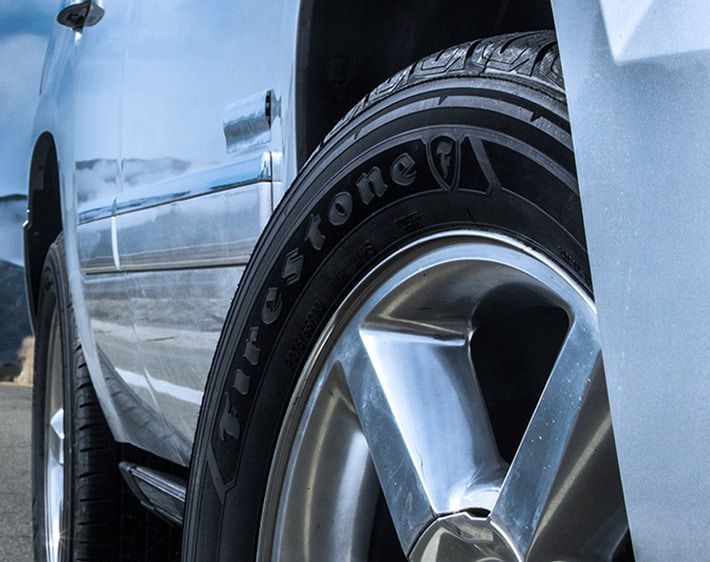
The Advantages of Choosing Firestone Tires
- Reliable traction in wet and dry conditions
- Balanced ride comfort and road noise control for a smoother daily drive
- Designed to support fuel efficiency through optimized tread patterns
- Trusted brand with over 125 years of experience
- A wide range of tire options for cars, SUVs, and trucks
FAQS
-
Tire size is a standardized set of numbers, such as 225/65R17, that identifies a tire’s key dimensions and fit. It tells you the tire’s width, aspect ratio (the sidewall height), construction type, and the wheel size it fits, helping you choose the right tire for safe, consistent performance.
-
Tire numbers (like 225/65R17) describe a tire’s size, construction, and key dimensions, helping you choose the right fit for your vehicle. In this example, 225 refers to the tire’s width in millimeters from sidewall to sidewall, 65 is the aspect ratio, or the height of the sidewall as a percentage of the tire’s width, R indicates radial construction (the most common type), and 17 is the wheel diameter in inches that the tire is designed to fit. Together, these numbers help ensure the tire matches your vehicle’s specifications, supporting proper fit, handling, and overall performance.
-
Your tire size is usually easy to find once you know where to look. The most common place is the tire sidewall, where the full size is printed. You can also check the driver’s door jamb label or your owner’s manual for the recommended size for your vehicle. These references help you find the right fit for safe, consistent performance.
-
No, it is generally not recommended to use a different tire size than the one specified for your vehicle. Your recommended tire size is selected to help maintain proper handling, braking performance, ride comfort, fitment, and speedometer accuracy. Using a significantly different tire size can affect how your vehicle performs and may create clearance or fitment issues.